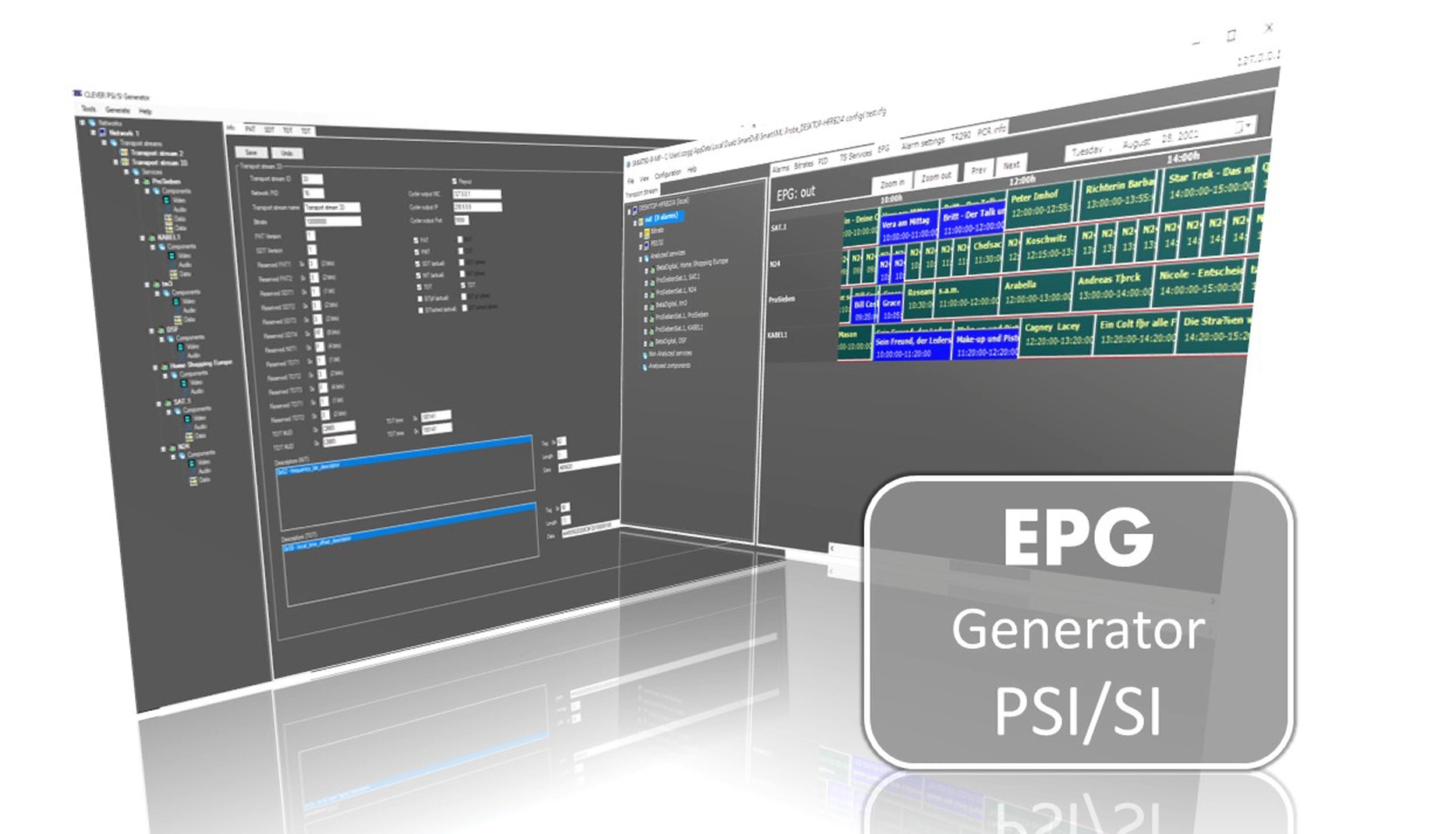
Generator output and guide view together
See the generated transport stream alongside the programme grid so the table flow is easier to understand.
PSI generation builds the output transport stream and carries the programme schedule in EIT tables. PAT, PMT, NIT, SDT, and EIT work together so the receiver can find services, read guide data, and present the correct schedule.
The output transport stream is not just audio and video. It also carries the tables that tell receivers what services exist and what programmes are on now and later.
PAT points receivers to each service map, and PMT describes the elementary streams that make up the service.
NIT describes the network and tuning context, while SDT carries the human-readable service names and flags.
EIT present/following and schedule tables carry the EPG data that receivers render in the guide.
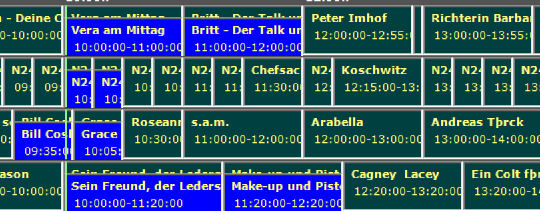
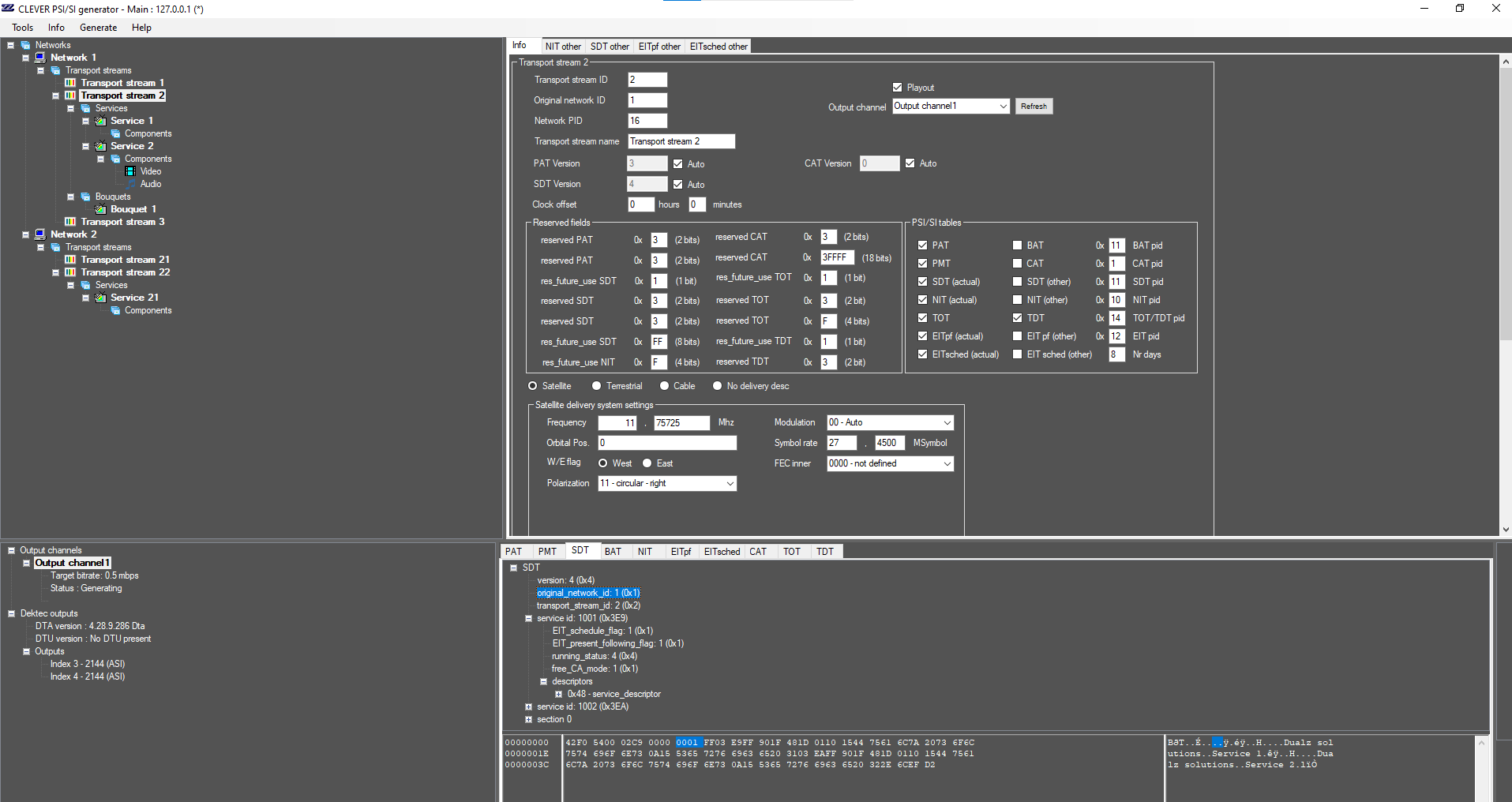
A complete PSI generation workflow produces the multiplex, the service metadata, and the EIT schedule tables that drive the guide.
Generate the transport stream that carries the DVB services and the tables the receiver needs.
Populate EIT p/f and schedule tables so the now/next view and the programme grid stay current.
Keep the table set aligned so receivers can tune, decode, and display the guide correctly.
See the generated transport stream alongside the programme grid so the table flow is easier to understand.
The EPG grid is populated from EIT present/following and schedule tables in the output stream.
Use the management view to confirm service identifiers, table versions, and schedule inputs before output is created.